Monday, October 5, 2015

Crystal Beach Park

Temperature: 82F
Water Temperature: 84F
Wind: breezy
Cloud Coverage: 80%
Humidity: 71%


Crystal Beach is not what comes to mind when someone says “beach.” My initial thought of the place was “Oh man, it smells and I don’t’ know how she expects us to get down in that water.”

My group, (Lisa, Sarah, Clark, Austin, and myself) had our 30-meter line along the shore in about shin-deep water. Our quadrat was placed every 3 meters, and we found the following organisms:

Salt grass
Gastropods
Cyanobacteria
Fiddler crabs
Mollusks
‘Mini’ crabs
Snails


Our diversity was .6291 out of 1


Throughout the afternoon we also saw a few other exciting things including:

A huge stingray
Horseshoe crabs mating
The three types of mangroves
A horseshoe crab go after Andrew
A great blue heron

Our purpose of going to this park was to dive into diversity, examine how substrates can be mineral, plant and animal based, and to see the different types of mangroves and their differences.


Sunday, October 4, 2015

Crystal Beach

Purpose - Identify different types of plant and sea life
84 degrees with a light breeze 
50% cloud coverage 
High tide 
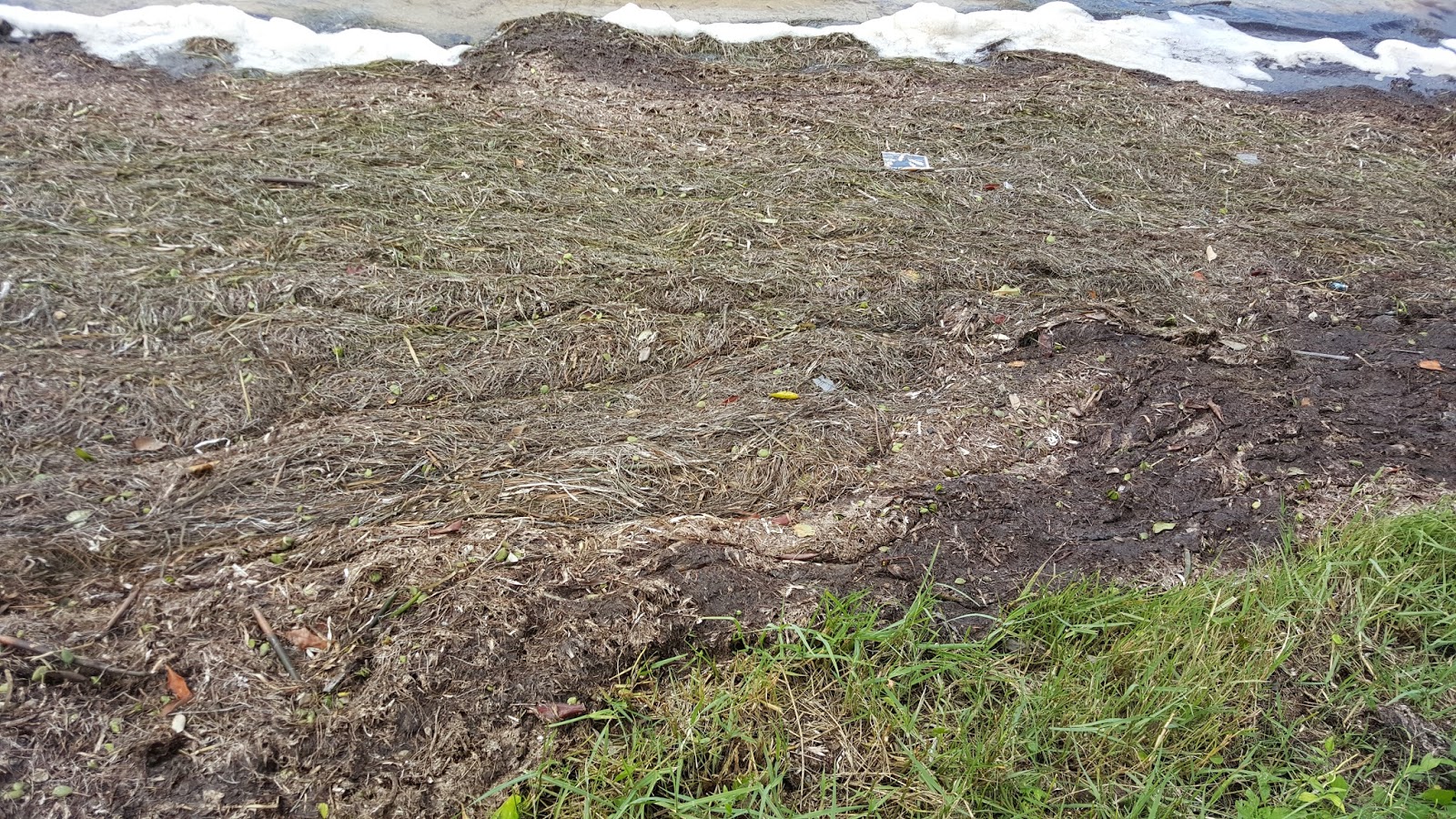
The park consists of a small strip of beach mostly covered with washed up sea weed, mangrove leaves, and trash. The water was clear and most marine life in the area was visible from a distance. It is obvious the beach is only minimally managed due to how much of the beach is covered in seaweed.


 I spotted a great blue herring as I walked along the pier it was picking small crabs and insects out of the washed up sea weed.


 Sea snail above
We performed a study that involved us taking samples every 3 meters for 30meters and recording what we found. We mostly found mangrove leaves and bark we also found some sea life many small red worms eating the decaying plant material and some small crabs. Two horse shoe crabs ran into us as they scurried about together in random directions. 

Toward the end of the trip we took some time to learn the difference between the types of mangroves. White has light colored round leaves, Black mangroves are the tallest with the smallest leaves due to there ability to get the most light and have a white color on the bottom of there leaves. Red mangroves have the largest leaves and are a darker green color and have a shine to them.


Crystal Beach

Crystal Beach

This week our trip was to beautiful Crystal Beach.  This beach is located in between Palm Harbor and Tarpon Springs, nestled at the end of Crystal Beach, and is a very quaint area.  The weather was 82 degrees with around 70% humidity with small cloud cover forming.  The purpose of our trip was to measure diversity of species in the different areas of the beach.  Our group did measurements utilizing the quadrat and measuring tape, along with several calculations to arrive at .6291, which surprisingly was not the lowest. The other groups measured along the pier, which I thought would have had a more diverse population than that of our group or the mangrove group.  Interesting!


The shoreline, mating horeshoe crabs and taking down the data. 


Marine mollusk

The ecosystem is mangrove and estuary.  There was a distinct odor which is given off from the anarobic activity taking place.  Sea grasses lined the waters edge, sea foam and layers of dead sea grasses and seaweed were deposited on the shore.  There were red, white and black mangroves.  Turtle grass, manatee grass and shoal grass were all observed as well.  The day was another enjoyable day with this class and Dr. G.

Crystal - Austin Mutnansky

Crystal Beach

Crystal Beach was a nice, 82 degrees (F) with a nice breeze and minimal clouds (20-30% cloud coverage nearby).  The beach was located beside a neighborhood and the Gulf of Mexico, giving a secluded beach environment.  The sand was very mucky, and the water temperature was 84 degrees (F).  The humidity was 72.  At first glance, the most prominent plant growing near the water are mangroves beside the estuaries.  When we arrived at 2:15, it was at high-tide.


                Our purpose for being at Crystal Beach was to observe the wildlife and how the change in substrates lead to different types of minerals, plants, and animals the farther you go out from the beach. This would be done by measuring 30 meters from a specific point, and every 3 meters a transact would be placed to observe the different organisms living within.  This is called a diversity index, and different groups did different locations along the beach (some extended out towards the dock, while our group examined north to South along the edge.


                Before the diversity index, the group took a walk along the extended pier.  This gave us an opportunity to see some of the different wildlife along and near the pier.


We saw horseshoe crabs mating (these horseshoe crabs had quite the personalities!), a blue herron, saltgrasses, a giant string ray, and oysters and barnacles resting below the bridge.


                My group had the lowest percentage calculated of abundance of creatures (I believe that was the measurement) at .6291, while the other groups had numbers above .7.  Animals that were seen was (1) gastropod, 4 fiddler crabs, 3 mollusks, 19 mini crabs, 3 snails, and salt grasses. 


Saturday, October 3, 2015

Crystal Beach


October 1, 2015
2:10 pm 82 degrees
partly cloudy 71% humidity
breezy; water salinity 29%


Crystal Beach


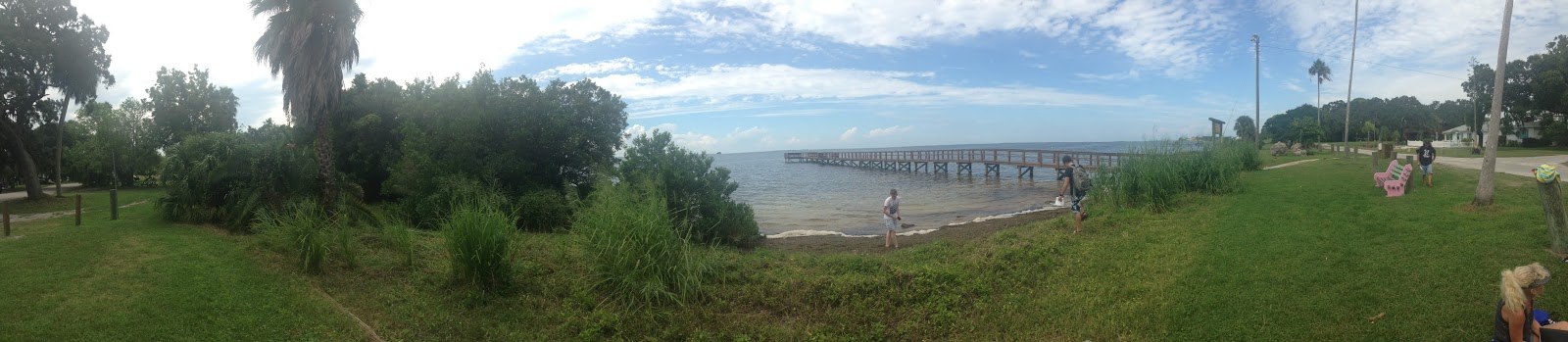
Panoramic view of pier at Crystal Beach
                 Today we met at Crystal Beach Florida a neighborhood park in north Pinellas County.  This beach is not highly managed like other more well-known beaches in the county similar to Clearwater Beach. The water was at or near high tide this day, as you can in the picture above the waves were pushing seawrack to the shore. Our mission here today was to identify the type flora and fauna in this estuary and determine if it was a productive estuary. 
     First we walked the pier gazing into the water looking for what we might see. We were all delighted to see a very large stingray it must have measured over 30 inches across. The water was fairly calm and clear. While scanning the water we saw horseshoe crabs, some solo other locked in a mating dance and fishes.  Gathering at the end of the pier we were broken down into three groups.
     Our group was to run a thirty meter transect line parallel with the beach just to the south of the pier and just to the west of the mangroves for ecological sampling. We performed a belt transect, took soil samples every three meters from the inside boundary of quadrat. We used a small net to filter out the sand to get a better look at what might have been in the soil. Our team was able to identify worms both red and white, small crabs almost invisible to the eye and mollusks like the fighting conch. Horseshoe crabs mating were continually swimming nearby. Schools of small fish were apparent and in abundance 
     Our assumptions are that this is a highly diverse area because of the grazing and detrital food webs which were verified by the worms and crabs we uncovered in our samples. The plants and sea grasses seemed healthy and abundant. We saw chelicerates, crustaceans, mollusks, vertebrates and invertebrates.  Red, black and white mangroves were packed on top of each other which is uncommon in a totally virgin environment. Using Simpson's Index of Diversity we determined our diversity was 0.89.79. This is a highly diverse region of Crystal Beach. The combination of living flora and fauna and the high number we recorded proves this estuary is highly productive. Using Simpson's Index of Diversity we calculated our diversity at 0.8979. This is a highly diverse region of Crystal Beach.

seawrack at the shoreline


Friday, October 2, 2015

Crystal Beach

Crystal Beach
October 1st, 2015
82 Degrees Partly cloudy; Breezy

Came to identify the different types of mangroves, and animals in this specific estuary. 

Crystal beach was a fun field trip, we saw many different types of animals in the gooky and smelly water. First we walked onto the pier where we saw a ginormous stingray (the biggest I've ever seen)


Above are 2 horseshoe crabs mating! They did this the whole entire time we were there and went in circles around us! Clark picked them up so we could see the bottom and it made me squirmish. 


We then each saw the diversity in a specific area for a certain number of creatures we could find. We had the shallow end which was probably the least diverse. We found a lot of mini crabs! Almost microscopic. We also found a mollusk, snail, mini crab, gastropod and a snail type thing! My job was to dig into the dirt every 3 meters and look for whatever we could find in it! It was super smelly! Our diversity of creatures and plants was .6291, the closer it is to 0 means it is less diverse and the closer it is to one made it more diverse. I would consider ours a little less diverse but we did have many repeating mini crabs! 

After all the groups were finished we took time to identify different types of mangroves. 


Above are the black mangroves, you can tell they are black due to the bottom of the leaf looking white! They tend to be the tallest and they are pnuematophores! 


 These next ones were the white mangroves, you could tell these apart from the others because they are the roundest and lighter in color then the black ones! 


And last but not least are the red mangroves, these leaves are smooth and bright green! 


There were no buttonwoods at this estuary. But I do have a very good idea of what a buttonwood does look like. It tends to have a white "pom pom" flower and cone like fruit. 

In an estuary you should realize (normally but not always) the different mangroves tend to grow from red to black to white to the buttonwoods starting from the water to the land!

This was a very fun field trip even though it was super hot! I am very glad I decided to put on those shoes in the end! Because now that I look back that would have been pretty gross to get into that water barefoot! 


Thursday, October 1, 2015

Mocassin Lake Park Field Trip

Date: August 27th 2015
Temperature: 79F
Humidity: 90%
Weather conditions: 100% of cloud coverage, 40% chance of rain

For our second field trip we visited Mocassin Lake Park in Clearwater. It became a managed site in 1982 and features 6 different ecosystems. During the class on Tuesday we were learning about native and invasive species and that was the main reason of our visit at the Mocassin Lake Park.

Our first task was to find 2 bird, 2 amphibians and 2 reptiles in a small museum type of a building. Then we had to figure out from our handbook whether the species that we found is native or invasive. From reptiles I could find Red Rat Snake and a Diamondback Terrapin which are both native. Black Vultures nad a Red-tailed Hawk were the birds that I identified and both of them are also native to Florida. The only invasive species I found was the White's Tree Frog.

After leaving the museum we went on a nice walk around the park. We could see many native and invasive species, like palm tree flower, air potato or caesar weeds. Our trip ended at the point where one of the wooden bridges collapsed due to the recent flooding of the park. We had to turn around and walk back to our starting point. Overall it was a great field trip and I could not believe we have such a nice park in our neighbourhood.